Catching Flak

Catching Flak

Catching Flak for Political, Historical, and Cultural Comment

Catching Flak
  • Home
  • About
  • Senior Editor

Category Archives: History

Read more..

Finding Sgt. Hutchinson: The Meaning of Memorial Day

Memorial Day—like Christmas, some would say— has lost some of its true meaning for most people who observe it.

Memorial Day weekend has become the unofficial beginning of the summer season.  Nearly everyone attends a picnic, parade, or family gathering and enjoys the warm weather. Too few remember that the holiday is intended as a day of remembrance of those who died in the defense of our nation. Even fewer take the time to decorate the graves of the fallen.

Last year, as guilty as anyone, I attended a neighborhood barbeque in Troy, New York, on Memorial Day weekend. Somehow the conversation turned to a book I’ve been working on concerning US airmen shot down over Yugoslavia during World War II. Do you know, one neighbor asked, that an airman who was killed in Yugoslavia is buried nearby, in Elmwood Hill Cemetery?

Soon my girlfriend Heather and I were off to find the grave. The man’s name was Staff Sgt. Martin C. Hutchinson, and he shared a gravestone with his parents, Irene and Charles Hutchinson. We shopped for a small flag—a surprisingly difficult task considering it was Memorial Day weekend—and placed it at the site. I also resolved to use the resources at my disposal to find out more about him.

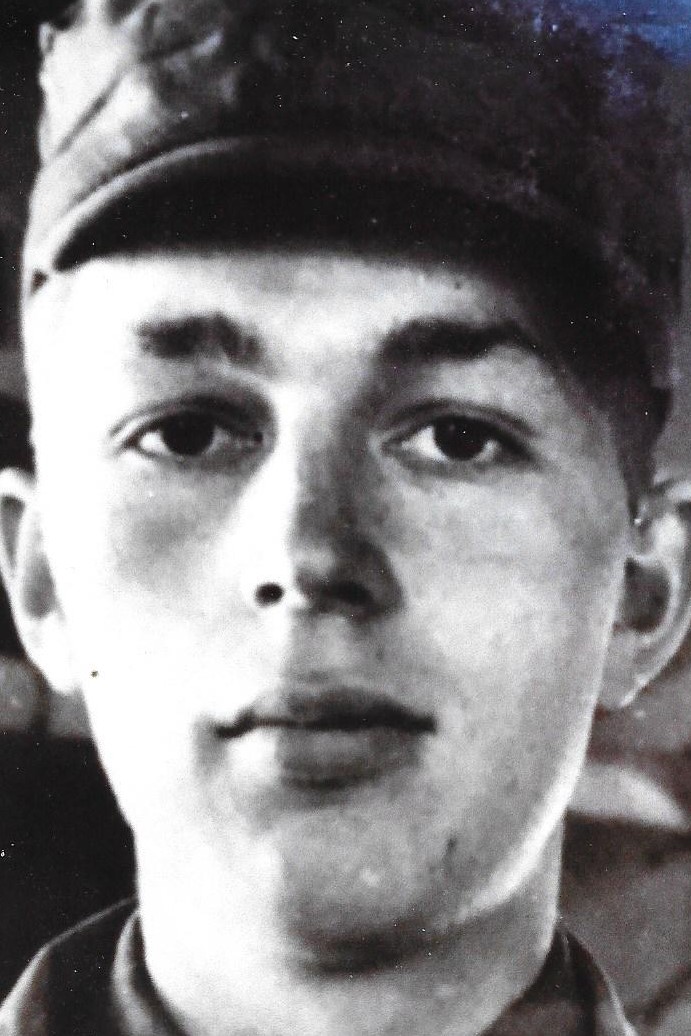
Marty Hutchinson, it turns out, was a pleasant young man with an artistic bent who looked something like the actor Colin Hanks. Like most kids in the 1930s, he was an aviation enthusiast and enjoyed making model airplanes. A year after graduating from Watervliet High School in 1941, he volunteered for the Army Air Forces hoping to become a pilot.

Hutchinson’s mediocre eyesight disqualified him from flight training. He did, however, possess remarkable mechanical aptitude. He trained at the Boeing aircraft plant in Seattle and became a B-17 flight engineer. As such, Hutchinson was the chief enlisted man on the heavy bomber’s ten-man crew. His importance in keeping the aircraft aloft was second only that of the two pilots.

Hutchinson planned to marry his girlfriend Norma before he shipped overseas. When his leave fell through, Norma flew to Texas and married him. Two days later, she followed him to Nebraska, his final staging point. There they enjoyed a few more days of married life. Norma wrote to Martin’s parents, exalting that their time together was “too wonderful to be true and too good to last.”

Hutchinson’s crew was assigned to the 2nd Bomb Group stationed in Italy. They began flying combat missions on January 24, 1944. Most of his targets were aircraft factories and transportation facilities in northern Italy, Austria, and Germany.

Hutchinson’s most costly mission occurred on February 22, 1944, during the “Big Week” all-out air offensive against the Luftwaffe. Thirty-Five B-17s from his Bomb Group took off that morning against an aircraft factory in Styr, Austria. Fourteen failed to return. Hutchinson happened to be flying in the middle of the formation. Nearly every plane to his rear was shot down by fighters, including the two directly behind him. No doubt, he felt very lucky to have survived.

On March 18, 1944, Hutchinson’s target was a vital airfield in Villaobra, Italy. Enemy fighters, determined to defend the airbase, rose and swarmed all over Hutchinson’s formation. Sometime during the dogfight, a JU-88—a German twin-engine aircraft—launched its rockets. One struck Hutchinson’s B-17 and exploded on contact, nearly severing its tail. The plane jerked violently, turned on its back, and fell into a spin.

Hutchinson was likely stationed in the upper machine gun turret, the position that flight engineers took when fighters approached. He and most of the crew were trapped inside.

Only two crewmen reached an escape hatch in the B-17’s nose. Lt. Adam Pryzyna, the bombardier, bailed out and survived.  Lt. Charles Evert, the navigator, managed to claw his way out of the hatch, but too late. By then the plane was too close to the ground and his parachute did not have time to blossom.

Yugoslavians from Gerovo, Croatia, found the wreckage the next day. Their sympathies were with the Partisan underground. They carried the airmen’s bodies to the nearest town and gave them an ornate Catholic funeral with full military honors. Every villager attended. They garlanded the graves with flowers and wreaths.

Sgt. Hutchinson is not buried at the gravesite in Troy that bears his name. A few years after his death, officials from the American Graves Registration Commission reinterned the crew’s bodies. They gave Hutchinson’s mother, Irene, the option of having his body brought home. She decided that he would have wanted to be buried with his crewmates. His final resting place is the American military cemetery in Florence, Italy: Plot H, Row 11, Grave 34.

Later, the Gold Star Mothers asked Irene if she wanted to march in a Memorial Day parade in Altamont. They told her that they wanted to honor her for giving her son to the war. “I didn’t give my son to war,” Irene snapped, “it took him.” She did not march.

Still, I like to think that Irene would not begrudge us a picnic on Memorial Day weekend—so long as the true meaning of the holiday is not forgotten. After all, one such picnic led to a better appreciation of her son’s sacrifice.

And didn’t men like Sgt. Martin C. Hutchinson give up their lives so that the rest of us could enjoy the blessings of freedom? 

May 27, 2017 Charles Stanley
Read more..

Will Obama Apologize at Hiroshima?

The White House has announced that President Obama will become the first sitting U.S. president to visit Hiroshima.

The president will visit the Hiroshima Peace Memorial Park, a site dedicated to the thousands who in the world’s first atomic bombing during World War II. According to Ben Rhodes, Obama’s deputy national security adviser, the President will meet with Japanese Prime Minister Shinzo Abe there “to highlight his continued commitment to pursuing the peace and security of a world without nuclear weapons.”

“In making this visit, the president will shine a spotlight on the tremendous and devastating human toll of war,” he wrote. “Their visit will offer an opportunity to honor the memory of all innocents who were lost during the war,” Rhodes added.

Rhodes also noted that Obama would use his appearance on May 27 to promote nuclear nonproliferation and America’s strong ties with Japan.

Rhodes continued:  “As the president has said, the United States has a special responsibility to continue to lead in pursuit of that objective as we are the only nation to have used a nuclear weapon.”

It sounds like the beginning of an apology. The vast majority of Japanese believe that the United States’ use of the two atomic bombs to end the war was unjustified. There have been calls for a US apology, or even reparations, for years.

Apologies are important in Japanese culture. Japan has issued a litany of apologies for the Empire’s many atrocities during World War II.

Yet Japan’s apologies, or lack of them, remain controversial today. In 2008, Prime Minister Shinzo Abe’s denied that the Imperial Japanese military had forced “comfort women” into sexual slavery during World War II. In addition, Prime Minister Abe stated “There is no definitive answer either in academia or in the international community on what constitutes aggression. Things that happen between countries appear different depending on which side you’re looking from.”

In 2007, the United States House of Representatives passed House Resolution 121, asking that   the Japanese government apologize to former comfort women and include curriculum about them in Japanese schools.

The controversy went on for years. At the end of 2015, Japanese Foreign Minister Fumio Kishida and South Korean Foreign Minister Yum Byung-se announced that they “finally and irreversibly” resolve the “comfort women” issue. Nevertheless, many of the surviving “comfort women” expressed their discontent over the agreement.

Obama has been extremely divisive in domestic politics while claiming to be a unifier. No doubt, he will bring his unique brand of controversy to this issue as well.

May 10, 2016 Charles Stanley
Read more..

What Trump’s “America First” Policy Means

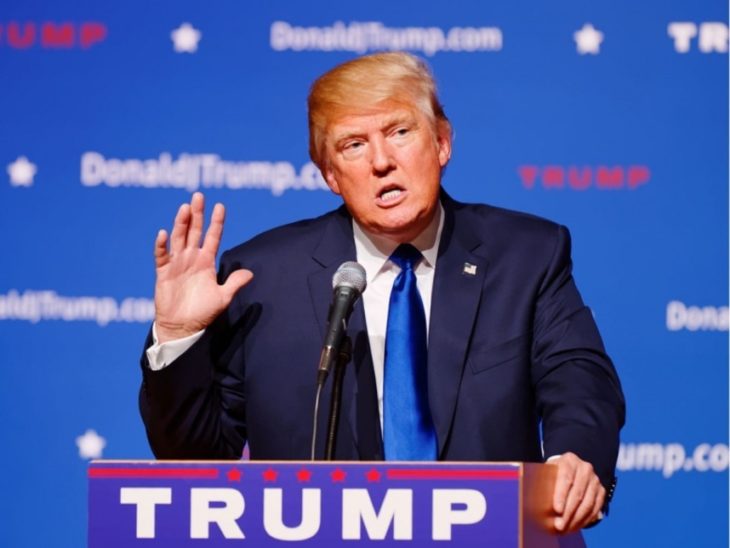
Yesterday Donald Trump made his initial foray into foreign policy, announcing that “America First will be the major and overriding theme of my administration.”

Today the slogan is generating criticism from some who remember what the term “America First” meant in the early 1940s.

CNN proclaimed that “Trump’s ‘America First’ has ugly echoes from U.S. History.” The Chicago Tribune opined that “Donald Trump’s new America First slogan has old baggage from Nazi Era.” Radio host Glenn Beck managed to link Trump with David Duke, the Ku Klux Klan, and Neo-Nazis during his broadcast this morning.

The America First Committee, as the historically-minded know, was an isolationist movement that attempted to prevent the United States from intervening on behalf of the Allies before World War II.  Its most noteworthy spokesman was aviator Charles Lindbergh, an unabashed admirer of the Nazi Luftwaffe. It disbanded soon after the Japanese attack on Pearl Harbor.

Certainly, someone on Trump’s campaign team knew the historical significance of the term. They knew, but they didn’t care. Intellectuals who remember the now-discredited “America First” of 75 years ago are not going to vote for Trump anyway. Trump’s advisors were also confident that the term, once identified with anti-Semitism, would not tinge Trump in that way due to his strong pro-Israel stand.

Trump’s speech tries to re-invent the term for a modern audience.

“Many Americans must wonder why our politicians seem more interested in defending the borders of foreign countries than their own,” Trump declared. “Americans must know that we are putting the American people first again. On trade, on immigration, on foreign policy – the jobs, incomes and security of the American worker will always be my first priority.”

But is Trump’s “America First” isolationist like its precursor from the 1940s? Or is it interventionist?

First Trump criticizes the interventions of the recent past.

“It all began with the dangerous idea that we could make Western democracies out of countries that had no experience or interest in becoming a Western democracy. We tore up what institutions they had and then were surprised at what we unleashed. Civil war, religious fanaticism; thousands of American lives, and many trillions of dollars, were lost as a result. The vacuum was created that ISIS would fill. Iran, too, would rush in and fill the void, much to their unjust enrichment.”

Yet then Trump endorses future interventions.

“Iran cannot be allowed to have a nuclear weapon and, under a Trump administration, will never be allowed to have a nuclear weapon.”

Never? At what cost? War?

“And then there’s ISIS,” Trump continued. “I have a simple message for them. Their days are numbered. I won’t tell them where and I won’t tell them how. We must as, a nation, be more unpredictable. But they’re going to be gone. And soon.”

So we are going to intervene in foreign affairs, at least against ISIS. But those future interventions will be essential and winnable.

“I will not hesitate to deploy military force when there is no alternative. But if America fights, it must fight to win. I will never send our finest into battle unless necessary – and will only do so if we have a plan for victory.”

As if his predecessors didn’t think that their interventions were essential and winnable too. They did not think that they had a plan for defeat. Whoever does?

So what does Trump’s America First mean?

It means just what it says. Us first, everyone else second.

That’s Trump’s idea of a “disciplined, deliberate and consistent foreign policy” that “will endure for generations.”

April 28, 2016 Charles Stanley
Read more..

Liberal Heroes–Mahatma Gandhi, Karl Marx, and Che Guevara–Were Racists

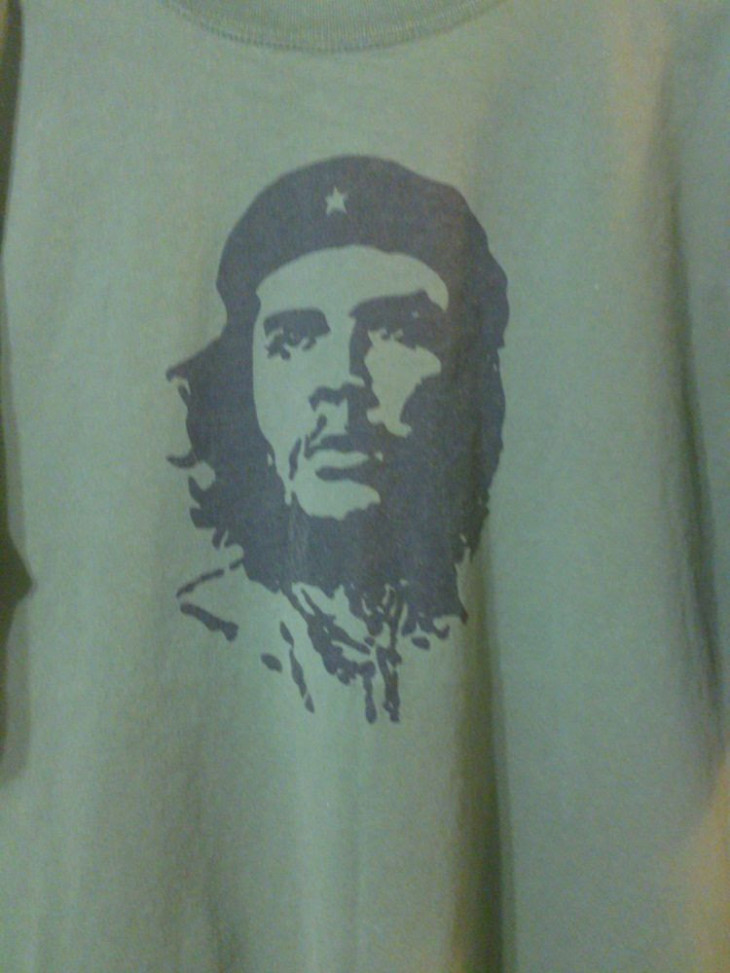
It’s always amusing when capitalists make money from images of Communists by selling them to naive college students, but this one is particularly offensive. Wear this in your “safe zone.”

From the National Review:

Whom would our undergrads revile if they knew a bit more history? A fetish for de-honoring objectionable historical figures is sweeping American college campuses. Targets range from unrepentant bastards like Jeffery Amherst to imperfect great men like Thomas Jefferson. I wonder if America’s undergrads realize that imperfection, and bastardy, are surprisingly widespread conditions: “The white race of South Africa should be the predominating race,” said Mahatma Gandhi. He also said, of himself and his followers, “We believe as much in the purity of race as” white South Africans. He called black South Africans “kaffirs,” which is South Africa’s equivalent of “niggers,” and objected to blacks living among South African Indians: “About this mixing of the Kaffirs with the Indians, I must confess I feel strongly. I think it is very unfair to the Indian population.” He wrote that “Kaffirs are as a rule uncivilized. . . . The reader can easily imagine the plight of the poor Indian thrown into such company!” There are dozens of such Gandhi quotes. Students at Oxford tried to tear down a statue of Cecil Rhodes — who endowed Oxford’s Rhodes Scholarship — after they found out he held comparable, Gandhi-esque views. Should we expect a “Gandhi Must Fall” campaign targeting the innumerable Gandhi statues worldwide? Like the one standing in London, in front of the Houses of Parliament?

“The black is indolent and a dreamer; spending his meager wage on frivolity or drink,” said Che Guevara. He added that members of the “African race” had “maintained their racial purity thanks to their lack of an affinity with bathing.” After the Cuban Communists took over, Che promised that they were “going to do for blacks exactly what blacks did for the revolution. By which I mean: nothing.” (Of course, it bears mentioning that Che also tortured and murdered many, many people. But to a young intellectual, thinking wrong is much worse than doing wrong.) “I shall never fight in the armed forces with a negro by my side. . . .

Rather I should die a thousand times, and see Old Glory trampled in the dirt never to rise again, than to see this beloved land of ours become degraded by mongrels, a throwback to the blackest specimen from the wilds,” wrote Robert Byrd, who — as you recall — was a Democratic senator in office from 1959 until 2010, the Senate’s president pro tempore until the Republican landslide in 2010, and the leader of the Senate Democratic Caucus from 1977 to 1989. He was also an ex–Exalted Cyclops of the KKK. What to do with the 50 or so schools, buildings, bridges, and highways named for Byrd?

The philosopher and political theorist Ferdinand Lassalle was described as a “Jewish Nigger” by Karl Marx, who added, “It is now completely clear to me that he, as is proven by his cranial formation and his hair, descended from the Negroes of Egypt, assuming that his mother or grandmother had not interbred with a nigger. . . . The obtrusiveness of the fellow is also nigger-like.” Jews were of particular interest to Marx, who accused them of being anti-Communists “at the head of the counterrevolution.” “It is only because the Jews are so strong that it is timely and expedient to expose and stigmatize” them, said Marx, evidently living in the conspiracy theorists’ version of 1850s Europe. He was quite candid about his plan for Communist revolutionary violence, saying of himself and Engels, “We have no compassion . . . we shall not make excuses for the terror.” He was likewise candid in his support for slavery, particularly what he called “the good side of slavery”: “Slavery is as much the pivot upon which our present-day industrialism turns as are machinery, credit, etc. Slavery is therefore an economic category of paramount importance.”

Will American college kids protest The Communist Manifesto being — according to Market Watch — the most-assigned economics text in the country? And do those students realize that the only man as universally well-regarded as Gandhi — Nelson Mandela — said, during a visit to Israel, “I cannot conceive of Israel withdrawing [from the West Bank and Gaza] if Arab states do not recognize Israel within secure borders”? Of course, that’s an opinion that carries the day on NRO, but what would all those undergrads chanting Viva, Viva Palestina! say about Madiba supporting Israeli “apartheid”? I won’t presume to tell our undergrads whom they should and shouldn’t revile. But I suggest they wait to rewrite history until they know something about it.

— Josh Gelernter writes weekly for NRO and is a regular contributor to The Weekly Standard. He is a founder of the tech startup Dittach.

February 13, 2016 Charles Stanley

Recent Posts

Finding Sgt. Hutchinson: The Meaning of Memorial Day

Finding Sgt. Hutchinson: The Meaning of Memorial Day

Memorial Day—like Christmas, some would say— has lost some of its true meaning for most people who observe it. Memorial Day weekend has become the unofficial beginning of the summer […]

More Info
Is the State Department Swamp Draining Itself? Hardly.

Is the State Department Swamp Draining Itself? Hardly.

First, only four career officials departed the State Department today, hardly the “Mass Exodus” reported by the Washington Post. Two other State Department Officials retired on inauguration day. [...]

More Info
Cuomo Passes the Buck on Poisoned Water

Cuomo Passes the Buck on Poisoned Water

On Tuesday, Cuomo Administration officials attempted to blame the Federal Environmental Agency for its own failure to warn the citizens of the upstate town of Hoosick Falls that their water […]

More Info
Why Cruz Refused to Back Trump

Why Cruz Refused to Back Trump

Today Ted Cruz confirmed what many suspected—that he refused to endorse Donald Trump because of Trump’s personal attacks on his family. Today Cruz confirmed that his refusal to back Trump […]

More Info
Powered by WordPress | theme SG Simple