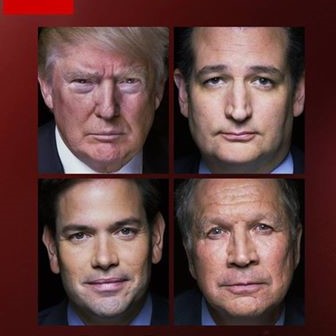
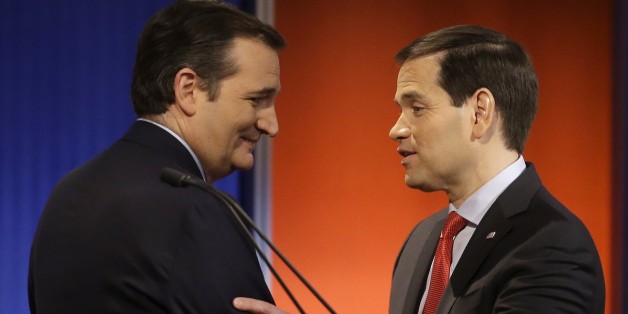
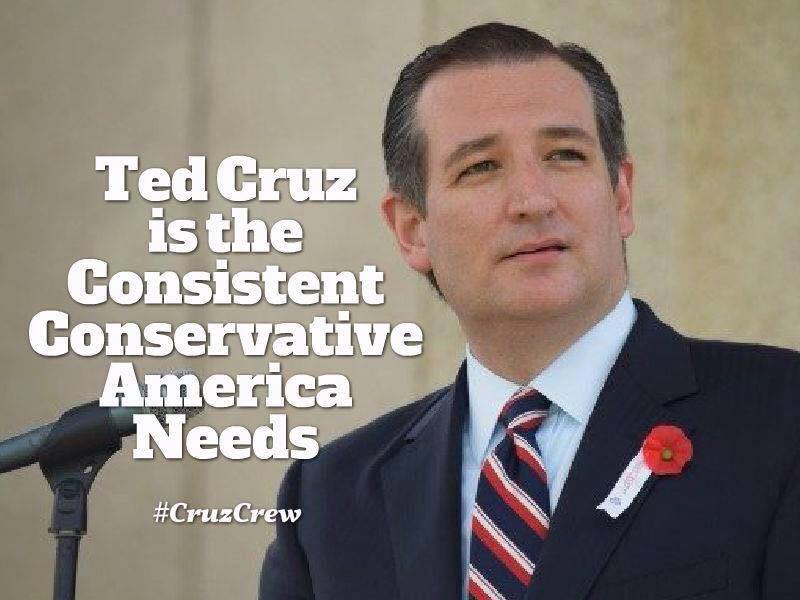
Polls consistently show that either Ted Cruz or Marco Rubio would beat Donald Trump if it were a two-way race for the Republican nomination. While Trump leads in delegates, the majority of Republican voters have opted for other candidates. Who has the better chance– Cruz or Rubio–to become the anti-Trump?
Initially, it would seem Cruz has the edge. He has more money and a better organization. A look behind the numbers, however, presents a different story.
A Republican candidate needs 1,237 delegates to win the nomination. Currently, Donald Trump has 67, Cruz 11, Rubio 10, and Kasich 5. Trump’s win in South Carolina gave him 50 delegates in a winner-take-all race even though he only polled 32.5 percent of the vote.
Next up is Nevada, a caucus-style race with 30 delegates in play. Then comes Super Tuesday with 13 states, a real test of a candidate’s appeal and organizational strength. Although some call it the “SEC Primary,” the geography extends far beyond the south. At stake are Alabama (50 delegates), Alaska (28), Arkansas (40),Colorado (37), Georgia (76), Massachusetts (42), Minnesota (38), Oklahoma (43), Tennessee (58), Texas (155), Vermont (16), Virginia (49), and Wyoming (29). That’s 580 delegates in all, nearly a quarter of the entire convention.
All of the Super Tuesday delegates are distributed in rough proportion to the votes received. Alabama, Georgia, Tennessee, and Texas, however, require candidates to have 20 percent of the vote to win delegates, a prerequisite that will hurt John Kasich and Ben Carson. Alabama, Arkansas, Georgia, Oklahoma and Texas turn into winner-take-all states if a candidate reaches a 50 percent threshold. In Tennessee, it’s 66 percent. None of the candidates are likely to achieve this mark. Ted Cruz may win in Texas, but he will not reach the majority necessary to take all 155 delegates.
Despite the huge number of delegates at stake, no candidate will come out of Super Tuesday with a commanding lead. Carson will likely drop out. Trump will have the most delegates, but will lack a majority. Kasich will soldier on, hoping for a victory in his native Ohio, a brokered convention, and a vice-presidential nomination.
March 15 will be the big day. It’s then that several large winner-take-all races will be decided: Florida (99 delegates), Missouri (52), Ohio (66), and Illinois (69). North Carolina (72 delegates), a proportional state, will also vote that day. Both North Carolina and Ohio–like New Hampshire–allow independents to vote in party primaries, a big advantage for Trump.
Later winner-take-alls include Arizona (58 delegates) on March 22; Delaware (16), Maryland (38), and Pennsylvania (71) on April 26; and California (172), Montana (27), New Jersey (51) and South Dakota (29) on the final day of primary season, June 7.
If Trump continues to win states–particularly the winner-take-all states–with a plurality rather than a majority, Republicans will be be stuck with a candidate that most of the rank and file voted against in the primaries. This would not bode well for the general election. The party needs to coalesce behind an anti-Trump candidate–and soon–if it hopes for a clean win in November.
It’s all about Florida on March 15. If Rubio loses his home state to Trump–and he’s behind in the polls at this writing–it’s all but over for him. If Rubio wins Florida’s 99 delegates, however, his victory will earn more delegates than Ted Cruz’s proportionate share of Texas.
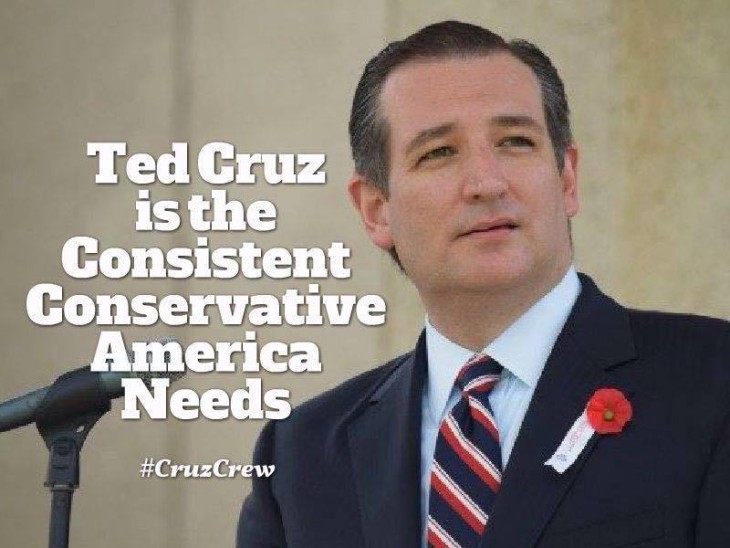
Cruz is faltering. Exit polls in South Carolina showed that more evangelicals voted for Trump than for Cruz. Cruz fired his campaign manager in an attempt to distance himself from of dirty campaign tactics.
The so-called “donor class” has to decide where to spend their money. They will not send it to Trump’s self-financed campaign. They will not send it to Ted Cruz, who reviles them. They will send it to Rubio, whose money problems may soon disappear.
If the party wants to stop Trump, they had better help Rubio in Florida and beyond. It’s that simple.